

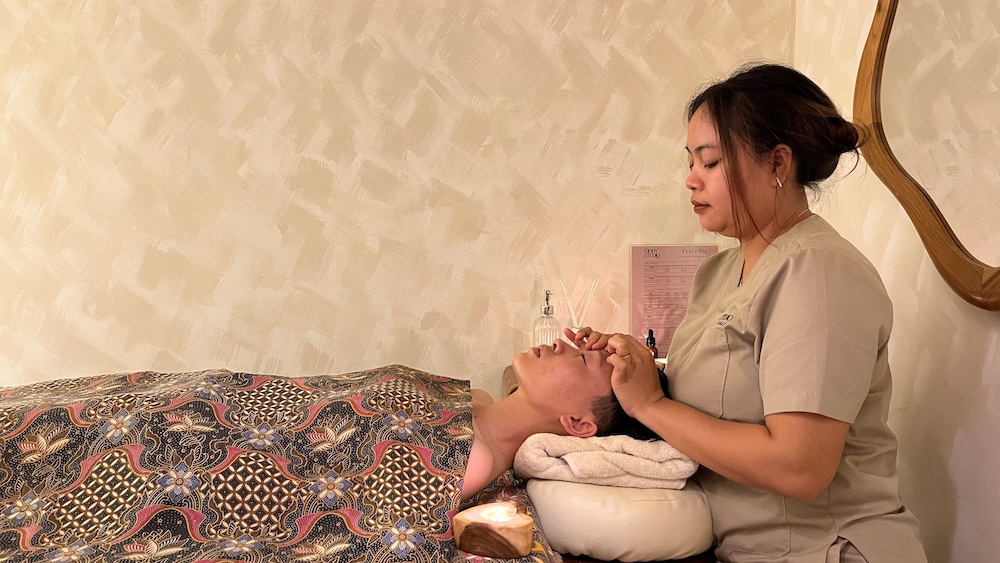
Living in Bali means navigating a high-UV environment where the sun elevation remains a dominant driver of skin stress year-round. With the island sitting roughly 8.5 degrees south of the equator, the UV Index frequently hits levels that trigger protective responses in the skin, often necessitating avoidance of midday sun. While sunscreen is the primary defense, as documented by randomized controlled trials showing its role in slowing visible aging, tropical life introduces unique stressors—humidity, saltwater, and the drying effect of constant air-conditioning—that change how your face feels and looks. Sorting through the myriad types of facials available requires understanding what these treatments actually do to your tissue, rather than choosing based on a spa menu.
Addressing Surface Congestion and Barrier Function
In a humid climate, the skin often struggles with a paradox: it feels oily on the surface yet lacks proper hydration in the deeper layers. When pores become congested from a combination of sweat, sunscreen, and environmental particulate, the initial goal is simple hygiene. Traditional extraction-focused facials serve to clear the follicular openings, preventing the build-up that leads to breakouts. However, if your skin feels “tight-but-oily,” it is often a sign of a compromised barrier. In these instances, the focus must shift to rehydration. A facial for dehydrated skin should prioritize replenishing the moisture reservoir through serums that support the barrier without occluding the pores. This is the physiological baseline; before you look for lifting or tightening, your skin needs to be structurally sound and free of inflammation.
The Physics of Deep-Tissue Facial Stimulation
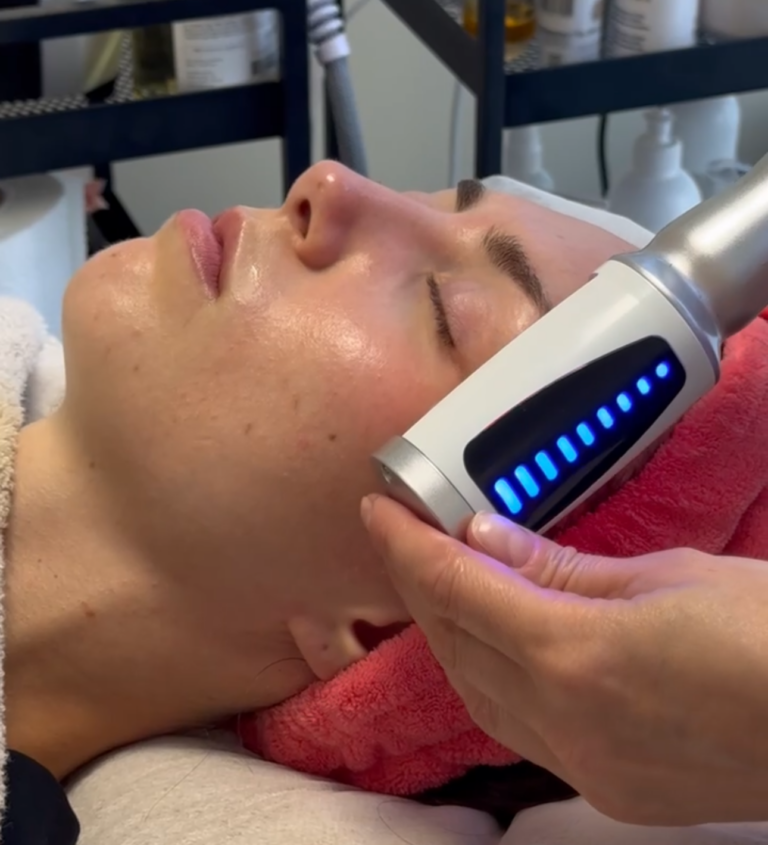
Once the surface is stable, many visitors to Bali seek solutions for puffiness or loss of contour. This is where machine-assisted technology diverges from manual massage. While a manual facial massage can improve temporary blood flow, mechanical devices like the LPG Endermolift or EndosTherapy use standardized, repetitive stimuli to influence deeper tissue layers. LPG Endermolift (60 minutes, IDR 799,000) employs motorized flaps to provide non-invasive stimulation, specifically targeting lymphatic drainage and circulation. It is a precise tool for reducing puffiness caused by heat-related fluid retention. Similarly, Endostherapy Visage (60 minutes, IDR 499,000) utilizes microvibration to support the sculpting of facial contours. Neither of these is a “miracle wand”; the literature confirms that these mechanisms rely on consistent, repeated application over a course of sessions—typically 4 to 10—to see measurable changes in tissue elasticity and tone.
Collagen Support and the Reality of Thermal Treatment
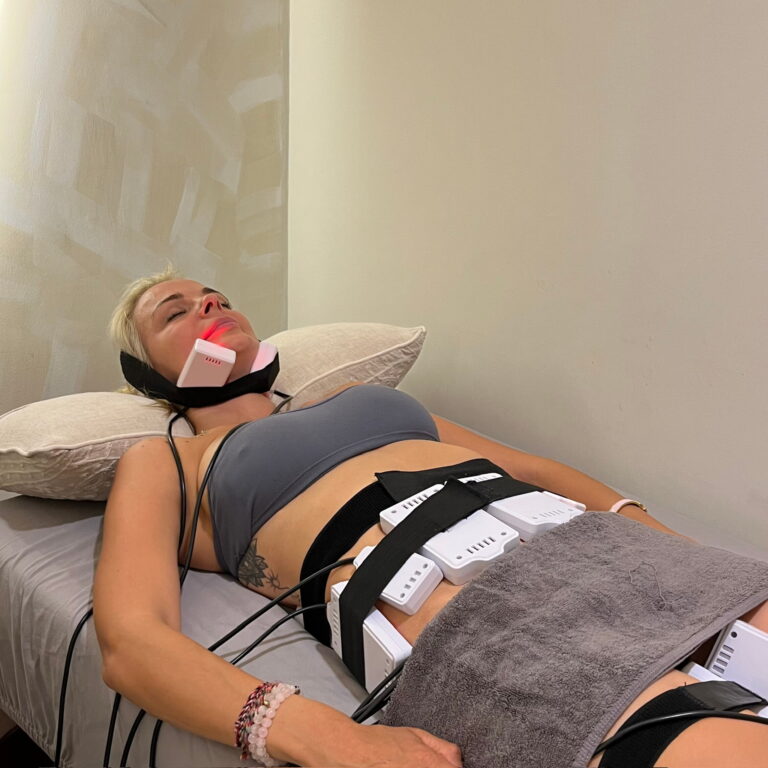
If the primary concern is skin density and the appearance of fine lines, radio-frequency (RF) technology is the standard approach. Treatments like RF Lifting Face (30 minutes, IDR 679,000) and Vacuum RF Visage (60 minutes, IDR 399,000) work by using heat to influence the deeper dermis. This thermal energy is intended to support collagen production and improve the firmness of the skin matrix. Because UVA rays drive dermal collagen breakdown and fibroblast damage—contributing to most of what we perceive as an aged face—these treatments are essentially counter-measures to photoaging. While they provide a firmer, tighter look, it is vital to understand that they act on the structural scaffolding of the skin. Results are not immediate; they build as the tissue responds to the controlled thermal stress over a recommended series of 4 to 8 sessions. Conversely, those seeking a sharper jawline might consider Cryolipolyse Jawline Area (45 minutes, IDR 809,000), which uses controlled cooling to target the lower face. It is perhaps the most specific tool for localized puffiness and definition, but like all device-based work, it should be approached as a structured program.
When searching for a facial in Bali, the most effective strategy is to avoid selecting by name and instead rely on a professional assessment. A facial for sun damaged skin may look entirely different depending on whether your current concern is active inflammation or long-term structural thinning. In a high-UV, high-humidity environment, your needs will shift based on your level of travel, outdoor activity, and exposure. The best approach is to book an initial consultation where a trained therapist can identify whether your skin requires barrier support, lymphatic movement, or collagen stimulation. By treating the skin as an organ that responds to physics and chemistry rather than as a canvas for superficial treatments, you can manage the specific environmental challenges posed by the tropics while maintaining long-term skin health.