

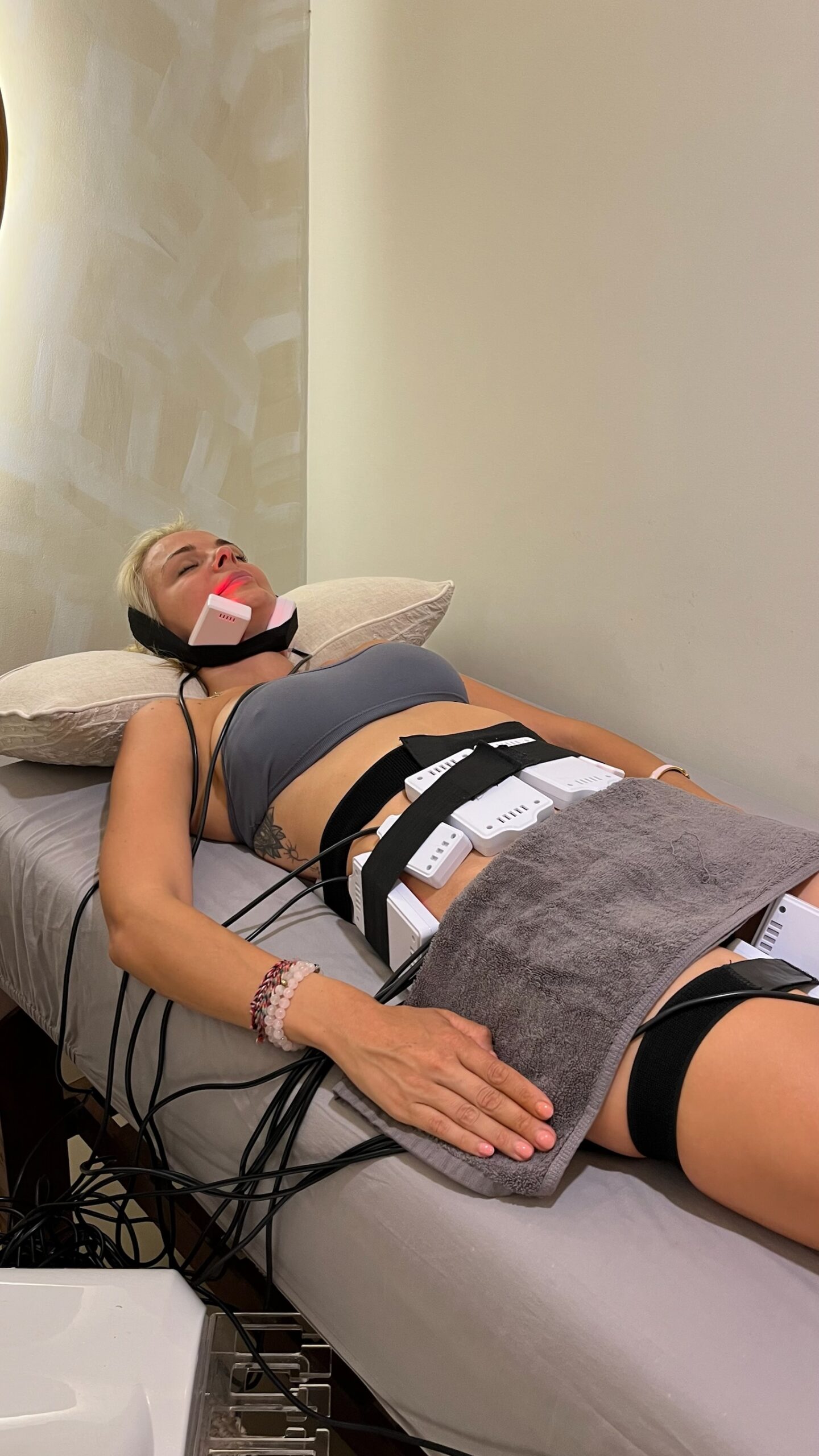
Stepping into a treatment room in Bali often feels like a choice between high-tech aesthetic procedures and traditional healing rituals. Among the options for body contouring, low level laser lipolysis—often referred to as cold lipo—occupies a unique space. Unlike cryolipolysis, which relies on the physical destruction of cells through freezing, this modality operates on a fundamentally different physiological premise: the use of specific light wavelengths to influence the permeability of the adipocyte (fat cell) membrane.
The Mechanism of Transitory Pores
To understand how this light interacts with tissue, we must look at the cellular scale. Research using transmission electron microscopy, such as the initial ex vivo studies published in Plastic and Reconstructive Surgery, identified a potential mechanism: when adipose tissue is exposed to 635–680 nm laser energy, it appears to induce the formation of transitory pores in the adipocyte membrane. This process allows the cell to release its stored contents—primarily triglycerides—into the interstitial space. It is a biological release rather than a thermal destruction. Nothing is “burned” or “frozen” away; instead, the cell is signaled to dump its contents, which are then mobilized into the lymphatic system to be metabolized.
This is precisely why a sedentary exit from the treatment room is counterproductive. Because the fatty acids are now circulating in the interstitial fluid, the body requires a mechanism to process them. This is the logic behind why a lymphatic drainage session or intentional movement is not an upsell or a “nice to have”—it is an essential functional component of the treatment protocol. Without this systemic clearance, the liberated lipids may simply be reabsorbed by local adipocytes.
Evaluating the Evidence and Managing Expectations
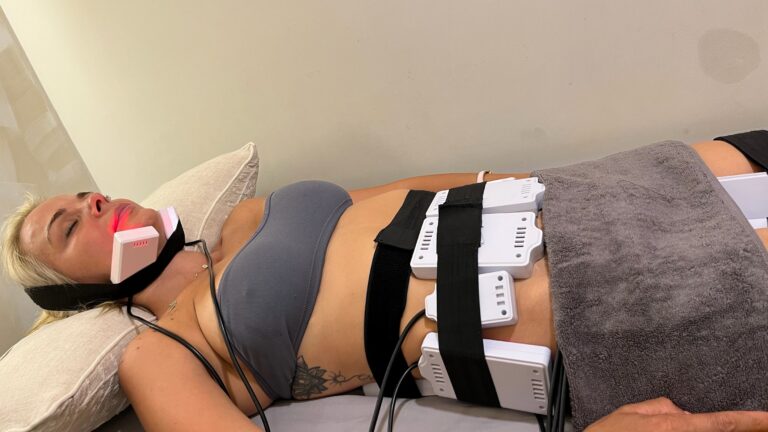
The academic literature on this technology is as nuanced as the biology itself. While the initial mechanistic descriptions were compelling, subsequent independent investigations have yielded more conservative findings. A comprehensive review by the Wellman Center for Photobiomedicine noted that some attempts to replicate early findings produced variable results, and other university-led studies, such as the work published in Lasers in Medical Science, found that objective fat reduction measurements were not always statistically significant in controlled split-abdomen trials.
When asking does laser lipo work, the answer depends entirely on your metric for success. If you are seeking a rapid, surgical-style debulking, you will likely be disappointed. As board-certified plastic surgeons have noted in ASPS guidelines, non-surgical fat reduction is not a weight-loss tool; it is a contouring procedure. It is most effective for individuals who are already near their target body weight but have stubborn pockets of tissue that do not respond to diet and exercise alone. Unlike fat freezing, which the Harvard Medical School blog confirms can yield 10–25% reduction in treated areas, cold lipo results are typically more subtle and cumulative. They rely on the body’s metabolic ability to clear the liberated lipids, meaning the “fat loss” is tied to your overall health, hydration, and activity levels. If the metabolic “sink” is full, the treatment will struggle to show an aesthetic payoff.
The Protocol at Body Studio Bali
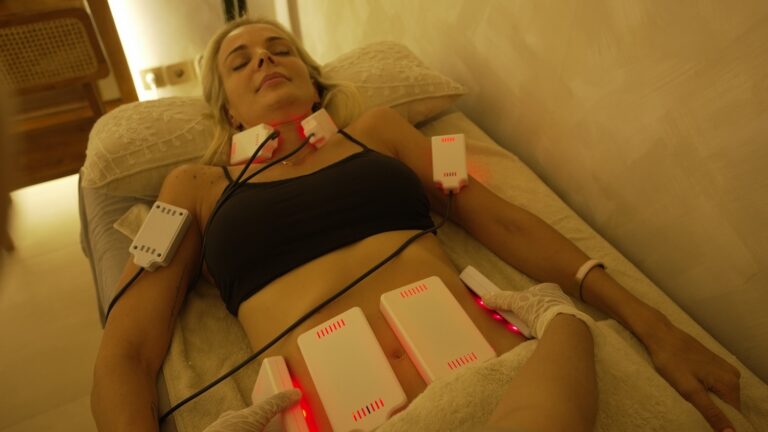
For those exploring lipo laser in Bali, the experience at Body Studio Bali is structured to optimize this specific mechanism. The session lasts 45–60 minutes, focusing on common stubborn zones such as the belly, waist, arms, thighs, and flanks. The procedure is classified as comfort-first, meaning it avoids the intense cold or potential inflammatory responses associated with other modalities. The session price of 399K reflects a focused approach to these zones, but because the effect is cumulative, consistency is the primary driver of any visible change in silhouette.
Regulatory documentation, such as the FDA 510(k) summary for this class of devices, confirms that these lasers operate specifically within the visible light spectrum (red or green wavelengths), confirming that they do not rely on high-frequency heating or cryogenic shock. They are designed for support—refining texture and contour—rather than structural modification of the body.
Ultimately, the efficacy of light-based body contouring is tethered to the reality of human physiology. It provides a non-invasive, comfortable way to encourage the body to shed stored lipids from localized areas, provided the patient understands that the “sculpting” is a collaborative effort between the laser’s signal and the body’s own lymphatic and metabolic efficiency. Success here is measured in millimeters and refined contours, not in drastic changes to the scale.