

On a humid Bali morning, cellulite can look more obvious than it did the night before. Heat, fluid shifts, lighting and the angle of the hip all change the view. The underlying structure has not suddenly appeared, however. Cellulite is an architectural feature of skin and subcutaneous tissue, not evidence that the body needs “detoxing”.
So, what is cellulite? It is the dimpled or rippled surface created when fat compartments press upward while fibrous connective-tissue bands, called septae, tether the skin downward. The balance between those forces varies from one area to another, which is why the same thigh may look smooth standing still and uneven when the muscles contract or the skin is compressed.
Cellulite is about structure, not simply excess fat
Under the skin, fat is arranged in chambers separated by fibrous septae. In women, these partitions are more likely to permit upward protrusion of the fat lobules, while some septae create fixed points of downward pull. Skin thickness and elasticity influence how clearly this pattern shows at the surface. Thinner or less resilient skin tends to reveal the underlying contours more readily.
This explains why thin women have cellulite too. A person can have relatively little body fat and still have visible dimpling because cellulite is not a direct measurement of weight, fitness or health. Genetics, connective-tissue anatomy, fat distribution and skin quality all matter. Hormones, particularly oestrogen-related influences on fat storage, circulation and connective tissue, are also thought to help explain why cellulite is much more common in women.
The broad peer-reviewed review of current cellulite science describes it as a multifactorial condition rather than a single problem with a single solution. That distinction matters. Reducing the size of a local fat deposit may alter contour, but it does not necessarily release tethering septae or thicken the skin.
Even Cryolipolyse, which targets fat cells, should not be confused with a dedicated cellulite treatment. Harvard’s explanation of what fat freezing can and cannot do describes an approximate 10–25% reduction of fat in the treated area per round, not weight loss or correction of fibrous tethering. The American Academy of Dermatology similarly advises that non-invasive fat-removal results are subtle and best suited to small, localised bulges.
Why creams rarely change the underlying dimples
Most cellulite creams act at the surface. Moisturising ingredients can temporarily plump dry skin, making texture less noticeable, while massage during application may briefly shift superficial fluid. Products containing caffeine or other active ingredients may also produce a short-lived tightening or dehydrating effect. None of this reliably remodels deep septae or permanently reorganises fat chambers.
That does not make every cream useless. In Bali, consistent moisturising can improve skin comfort after sun exposure, air-conditioning and frequent swimming. Better-hydrated skin may reflect light more evenly. But smoother-looking skin is not the same as a structural correction, and claims that a topical product “melts fat” deserve particular scepticism.
The same caution applies to drainage language. Lymphatic movement is real physiology: experimental research shows that mechanical stretch and fluid shear help regulate lymphatic pumping. Yet a plausible mechanism does not prove that every massage device produces lasting cellulite reduction. A review of lymphatic massage in cosmetic care notes reported reductions in post-procedure swelling and fibrosis, while also emphasising that the physiological mechanisms remain unclear and findings are not fully consistent.
What vacuum rollers and micro-vibration may realistically do
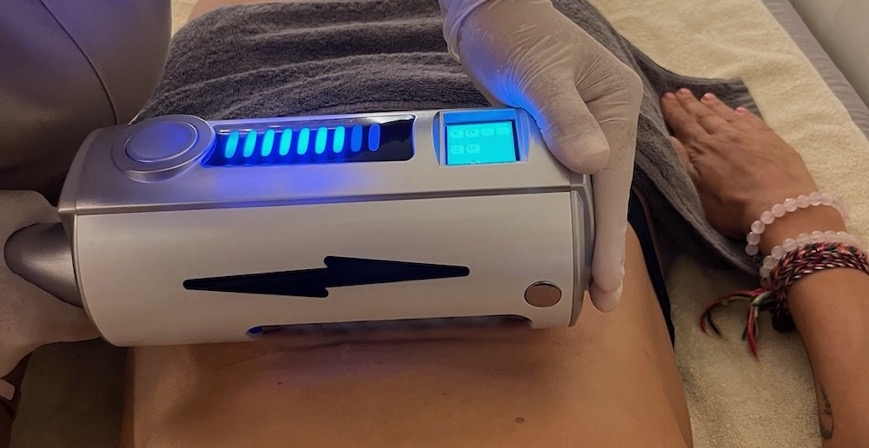
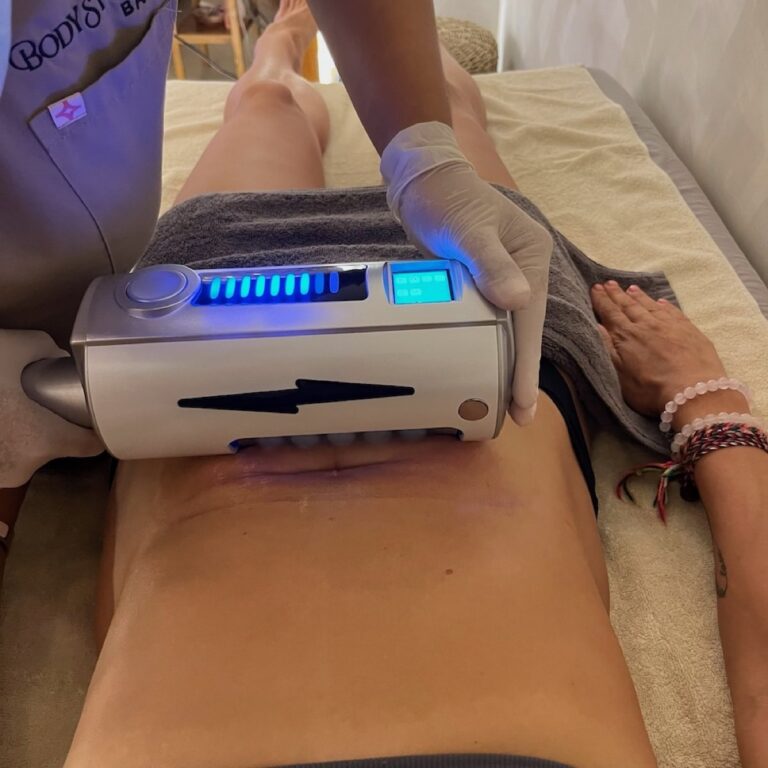
Vacuum-roller massage, often associated with LPG Endermologie, lifts a fold of tissue while motorised rollers mechanically mobilise it. The proposed effects include temporary fluid movement, stimulation of local circulation and redistribution or mobilisation of subcutaneous tissue. The treatment does not remove fibrous septae, and it should not be presented as fat loss.
Does cellulite treatment work in this form? The honest answer is: sometimes modestly, and not with certainty. The published review describes observational improvements with Endermologie, but durability was not reported, and the prospective randomised evidence found only partial benefit. Protocols also vary, so there is no scientifically secure universal promise such as “six sessions will remove cellulite”. Visible change, when it occurs, generally requires a course rather than one appointment, and maintenance may be needed because the underlying anatomy remains.
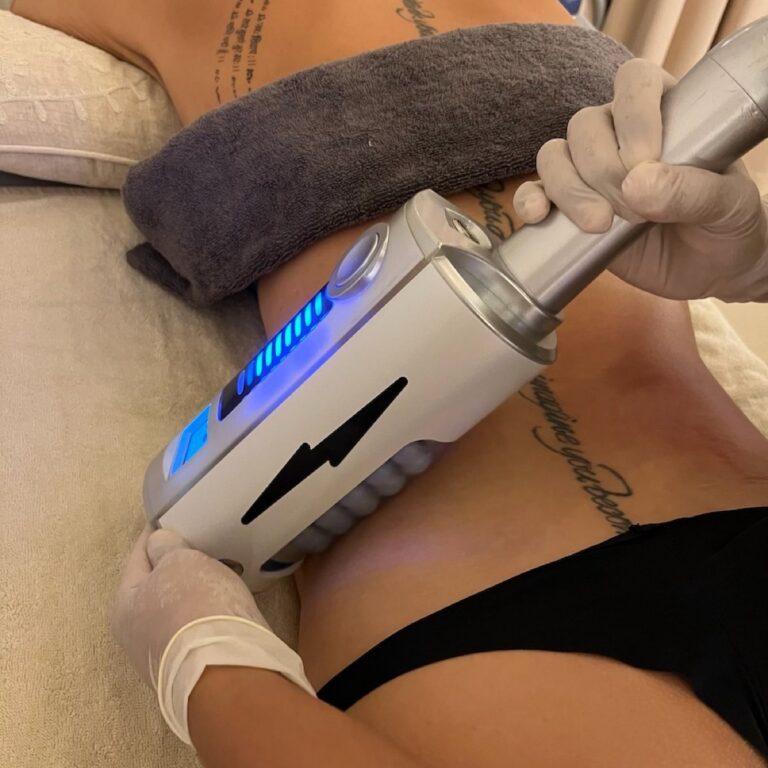
Micro-vibration or compressive-vibration treatments use repeated mechanical pulses rather than suction. These may temporarily affect tissue mobility, circulation and fluid distribution, which can make the surface look less congested. However, mechanistic plausibility should not be upgraded into proof. Device settings, treatment schedules and study quality differ, and evidence for durable structural correction is limited.
For anyone comparing a cellulite treatment in Bali, the useful questions are concrete:
- Is the goal temporary smoothing, fluid management or fat reduction?
- How many sessions were used in the evidence being quoted?
- Were results measured objectively and followed after treatment stopped?
- What happens if there is no visible response?
A realistic treatment plan starts with the right target
Mechanical treatment is most reasonable for someone seeking a subtle improvement in texture, not a change in body weight. At Body Studio Bali, vacuum-roller and micro-vibration approaches can be discussed in that context: tissue mobilisation first, followed by more targeted mechanical stimulation where appropriate. The logic of that sequence is to work with tissue mobility and superficial fluid before concentrating treatment on visibly uneven areas, not to claim that one device “breaks down” cellulite permanently.
Cellulite can soften in appearance as swelling settles, skin condition improves or tissue becomes more mobile. It can also remain visible after diligent treatment. That is not failure or lack of discipline; it reflects the fact that normal female anatomy cannot always be massaged into a different architecture.