


You wake up after two weeks in Bali feeling physically vibrant, but the mirror tells a different story. Your skin, usually resilient, feels tight, shiny, and curiously dehydrated beneath a layer of surface oil. Those faint pigment spots you hadn’t noticed before suddenly appear sharp against your sun-kissed tone. This is the physiological reality of equatorial skin stress. Living at 8.5 degrees south of the equator means you are exposed to a high-UV environment year-round, where the sun’s elevation drives intensity far beyond what many visitors anticipate. According to the Всемирной организации здравоохранения, the four-hour window around solar noon carries the highest risk, and in Bali, the UV Index frequently exceeds the thresholds where the WHO advises avoiding sun exposure entirely.
The Cellular Cost of Equatorial Exposure
The “tight and shiny” sensation isn’t just dryness; it is a signal of a compromised skin barrier. While we often obsess over the UVB rays that cause visible burning, it is the UVA spectrum that does the heavy lifting in terms of long-term damage. Research indicates that UVA penetrates significantly deeper into the skin than UVB, with roughly 100 times more UVA photons reaching the dermis than their burning counterparts. The International Journal of Molecular Sciences highlights that this specific range, UVA1, is a primary driver of dermal collagen breakdown and fibroblast damage. Because UVA1 passes through clouds and window glass, even your ride from the airport or a cloudy day at the beach has likely contributed to this structural wear.
When UV radiation reaches these depths, it triggers the production of reactive oxygen species. These molecules activate signaling pathways that suppress procollagen production and upregulate enzymes like MMP-1, MMP-3, and MMP-9, which effectively cleave your existing type I and III collagen. As noted in the Annals of Dermatology, this process is what we recognize as photoaging. It is not merely the passage of time that alters the appearance of the face; cumulative UVA exposure is responsible for the majority of age-related changes, including the development of dystrophic elastic fibers and a reduction in overall collagen density.
Navigating the Bali Holiday Skin Repair Sequence
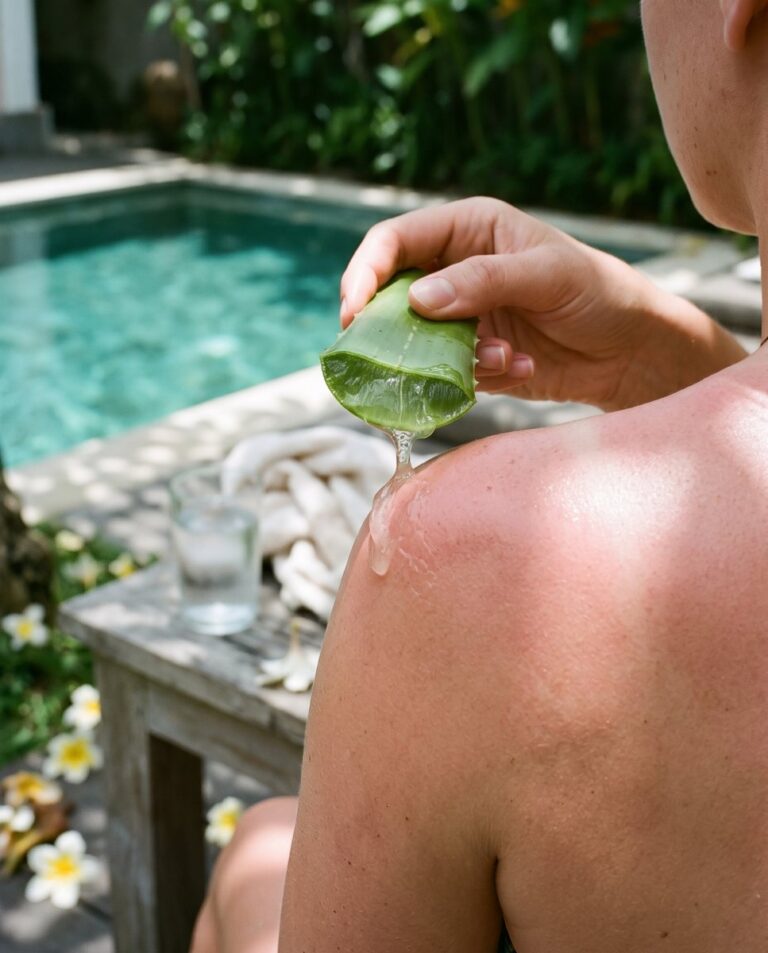
Effective bali holiday skin repair requires a shift from active, aggressive exfoliation toward barrier restoration. If you have just returned from the surf, the worst thing you can do is attempt to “scrub off” the tan or use heavy acids. Your skin barrier is currently hyper-permeable and inflamed. The immediate goal is to soothe the inflammatory response and rehydrate the epidermis without clogging the pores, which may have become congested due to a combination of sweat, salt, and heavy, water-resistant sunscreens.
Start with a gentle, pH-balanced cleanser to remove residual mineral filters and salt deposits. Follow this with humectants such as hyaluronic acid or glycerin, applied to damp skin to trap moisture. Only once the skin feels calm—usually after 3 to 5 days of consistent, hydrating maintenance—should you consider professional intervention. If you attempt a deep-cleansing facial while the skin is still actively inflamed from UV stress, you risk further aggravating the barrier rather than repairing it.
When Professional Intervention Matters
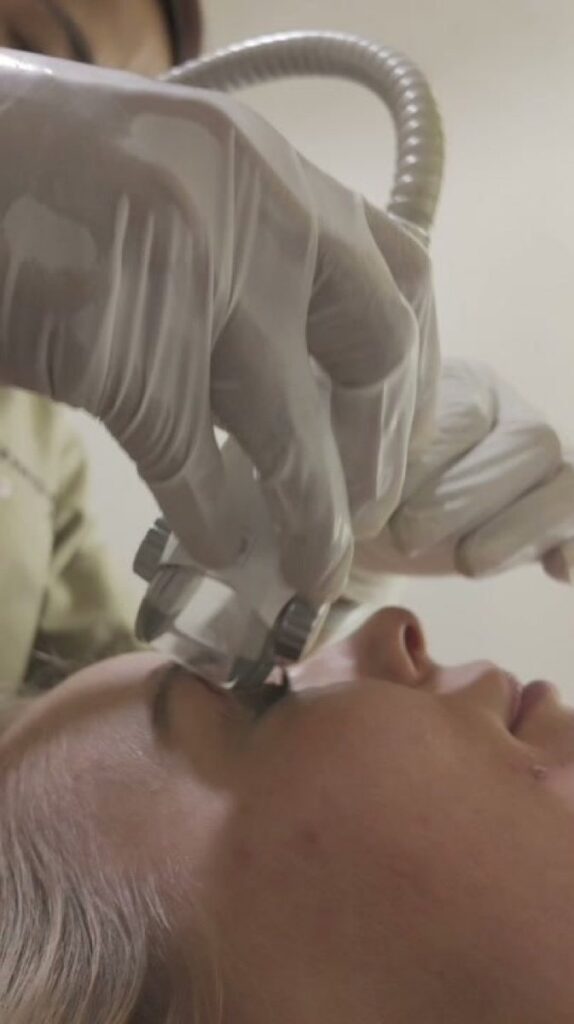
A professional facial after sun exposure is most effective when it focuses on gentle lymphatic drainage and deep, non-thermal hydration. In our studio, we see many clients who mistakenly believe they need an aggressive chemical peel to “reset” their skin. However, in a high-UV environment, the risk of post-inflammatory hyperpigmentation makes gentle modalities the safer, more intelligent choice. We often utilize techniques like LPG Endermologie for the face, which provides a non-invasive mechanical stimulation of the skin tissue.
The literature supports that protecting the skin is the most reliable way to prevent further decline. A landmark study published in the Annals of Internal Medicine followed hundreds of adults and found that those who used sunscreen daily showed no detectable increase in skin aging over a 4.5-year period. In contrast, the discretionary-use group showed significantly more signs of photoaging. The Американская академия дерматологии reminds us that most people only apply 20% to 50% of the required amount of sunscreen. To reach the labeled SPF, you need at least a full teaspoon for the face and neck alone, and it must be reapplied every two hours, regardless of how “water-resistant” the bottle claims to be.
At Body Studio Bali, our approach centers on restoring the integrity of the barrier through hydration and mechanical, non-invasive stimulation rather than harsh chemicals. We prioritize a sequence of cooling, moisture-infusing treatments that respect the skin’s current state of fragility. When you approach sun damaged skin care with a focus on biology rather than vanity, the skin’s inherent capacity to recover often surprises us. By treating the skin with the same patience you would give a healing muscle, you allow the surface to normalize while protecting the collagen structures beneath, ensuring that your time in the tropics leaves you with memories rather than lasting dermal damage.