

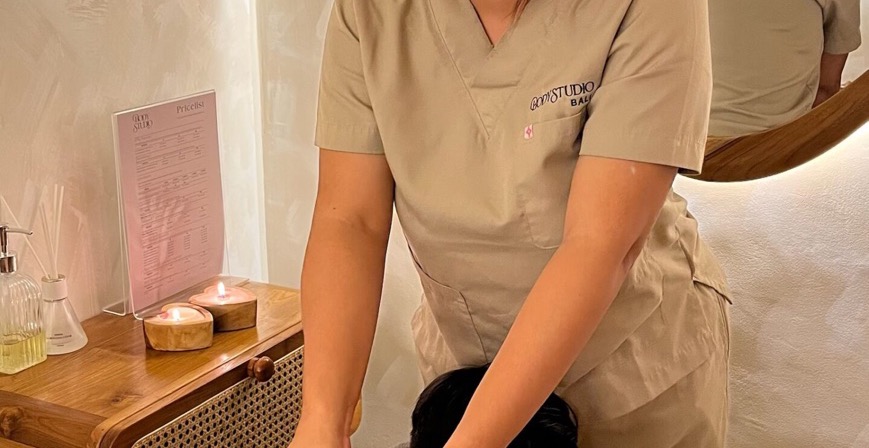
The humidity of Seminyak clings to the skin the moment you step off the scooter. It is a specific kind of atmospheric weight—part salt air, part exhaust, part tropical intensity—that seems to settle into the pores, leaving the face feeling dull and the body fluid-heavy. Inside the studio, however, the air is crisp and climate-controlled. The transition is visceral. A quiet, cool sanctuary replaces the chaotic hum of the street, and the first gesture of the visit is a Balinese welcome ritual: a dampened, chilled towel scented with lemongrass and a glass of ginger tea. It is a grounding tactile tether, a reminder that while the machinery waiting in the next room is clinical, the space remains rooted in the island’s hospitality.
The Physics of Mechanical Lymphatic Stimulation
The treatment begins not with a massage, but with the hum of high-tech instrumentation. In this context, the integration of devices like Endermologie or Endospheres is driven by a focus on subcutaneous physiology. These machines operate on the principle of mechanical stimulation of the skin and underlying soft tissue. By utilizing motorized rollers or rotating silicone spheres, these devices generate a specific rhythmic pressure that creates a localized folding and unfolding of the skin. Physiologically, this action is designed to stimulate the fibroblasts—the cells responsible for the production of collagen and elastin—and to improve the circulation of the lymphatic system.
When the fluid dynamics of the body are sluggish, particularly in a climate where heat often exacerbates peripheral edema, these mechanical interventions aim to encourage the movement of stagnant interstitial fluid toward the lymphatic nodes. The literature reports that this mechanical force can assist in reducing localized fluid retention, which is often mistaken for fat. It is important to distinguish between fat reduction and fluid drainage; while the former requires a significant change in adipose tissue volume—often involving the physical disruption of cells via криолиполиз или Кавитация—the latter is a matter of volume management. These devices do not “melt” fat in the way popular media suggests, but they do facilitate a more efficient environment for the skin’s connective tissue to function. For a visitor or resident in Bali, the immediate visual change is typically a result of this drainage: a reduction in puffiness and a temporary tightening of the skin’s surface appearance.
Thermal and Acoustic Mechanisms for Tissue Remodeling

Beyond the lymphatic drainage, the clinic approach shifts to deeper tissue remodeling using modalities like radio-frequency or HIFU (High-Intensity Focused Ultrasound). The rationale here is thermal. Radio-frequency devices deliver energy into the deeper dermis, causing a controlled heating of the collagen fibers. When these fibers reach a specific temperature range, they undergo a denaturation process followed by a natural contractile response. Over subsequent weeks, this injury-and-repair cycle triggers the synthesis of new, more structured collagen.
HIFU operates on a different, more precise physical principle. It uses ultrasound waves to reach specific focal points deep within the skin—often targeting the Superficial Muscular Aponeurotic System (SMAS) layer. Because the technology focuses energy at a specific depth, it leaves the surface skin intact while creating micro-coagulation zones below. This mechanism is essentially a controlled acoustic trauma. The physiological goal is to initiate a long-term neocollagenesis process. It is a slow, methodical intervention. Unlike a topical serum, which interacts only with the epidermis, these devices are designed to provide a structural shift in tissue laxity. It is essential to manage expectations: these procedures require time, consistency, and a realistic understanding of human biology. A single session provides a modest, transient benefit, while cumulative results typically manifest over three to six months as the body completes its remodeling cycle.
Bridging High-Tech Precision with Manual Artistry

After forty minutes of technological focus, the intensity of the treatment subsides. The final act of this bali aesthetic clinic experience is a transition to the traditional. The machine is powered down, and the sterile hum is replaced by the quiet application of warm, cold-pressed coconut oil scented with sandalwood. This is not merely an aesthetic choice; it is a clinical acknowledgment of the body’s need to return to homeostasis after mechanical stress.
By shifting to long, sweeping manual effleurage, the therapist addresses the nervous system’s response to the procedure. Following the use of high-intensity equipment, the skin benefits from the increased vascularity brought to the surface, which aids in the absorption of nutrients and the final dissipation of any lingering fluid. This sequence—first addressing the structural, sub-dermal layers with precise physics, then calming the surface with traditional oils—is the signature of a modern spa in Bali. It recognizes that while the physiology of collagen production is universal, the experience of a wellness treatment is deeply tied to the environment. Body Studio Bali balances these two worlds, acknowledging that while science provides the tools for change, the human touch provides the necessary closing note for a nervous system processing the effects of a high-tech hour. The result is a body that feels lighter and skin that has been physically engaged, all while the heat of the island waits patiently outside the door.