

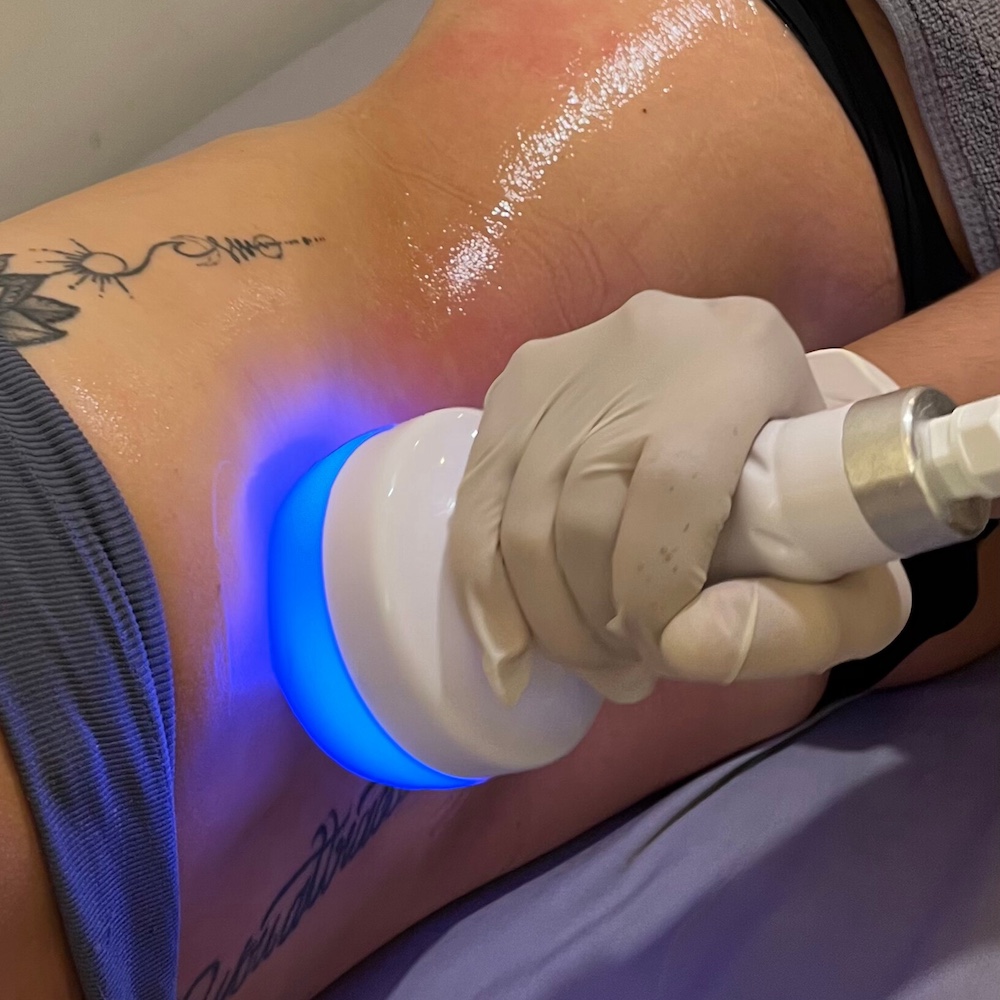
In the quiet rooms of a Bali wellness studio, the disconnect between marketing promises and biological reality is often measured in wasted appointments. When you commit to body contouring, you are essentially asking your body to process a disruption of cellular architecture. Whether that disruption is thermal or mechanical, the human body has a fixed, non-negotiable speed for clearing the resulting cellular debris. If you try to outrun this physiological limit, you aren’t achieving results faster; you are simply paying for sessions that the body cannot yet integrate.
The Physics of Cavitation and the Lymphatic Bottleneck
Ultrasonic 캐비테이션 relies on the delivery of 80 kHz ultrasound waves into the subcutaneous adipose tissue. This frequency is specifically calibrated to create micro-bubbles within the interstitial fluid surrounding fat cells. As these bubbles oscillate, they create pressure changes that cause the fat cell membranes to rupture, releasing their contents into the surrounding space. This process is effectively an immediate, permanent destruction of the adipocyte, which is why a single session at Body Studio Bali can result in a recorded reduction of 3–5 cm. However, the destruction is only the first half of the equation.
Once the adipocyte membrane is compromised, the remaining lipids must be mobilized and cleared. This is not an instantaneous evacuation; it requires the work of your lymphatic and hepatic systems. This is why session spacing is not a suggestion—it is a requirement of the technology. When practitioners suggest stacking three sessions in one week, they are ignoring the fact that the lymphatic system has a finite capacity for transport. Overloading the system does not accelerate fat loss; it simply leaves the body to contend with a surplus of liberated debris. Clinical reality dictates that one to three sessions a week is the optimal cadence for a treatment course length, allowing for adequate clearance between exposures. If you are not seeing a measurable change within the expected two-to-four-week settling period, adding more sessions is rarely the answer. At that point, the limitation is not the machine, but your body’s metabolic rate or systemic clearance capacity.
Why Cryolipolysis Demands Patience
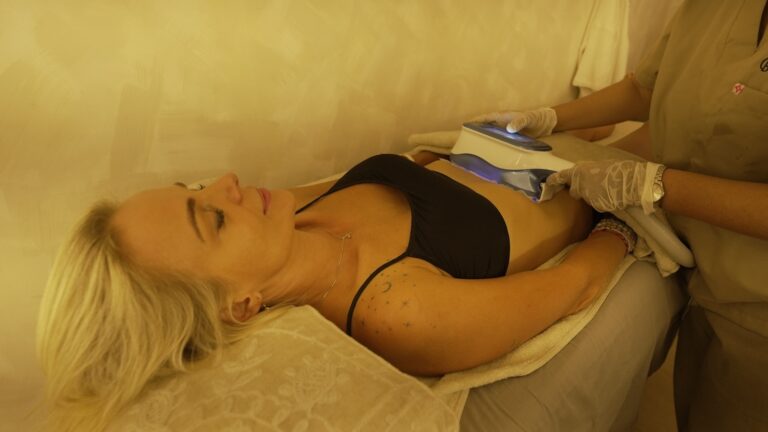
While cavitation relies on mechanical disruption, cryolipolysis—or fat freezing—operates on the principle of apoptosis. By lowering the temperature of the target area, the treatment induces a controlled, selective death of adipocytes. As established in the founding research, the process involves an inflammatory response where macrophages are recruited to the site to engulf and digest the damaged cells. This is a deliberately slow, physiological cascade.
유럽경제지역(EEA) 또는 영국에 소재한 고객에게 적용되는 경우, original porcine studies and subsequent human clinical reviews show that this reduction in fat-layer thickness is not immediate; it manifests over weeks and months as the body systematically clears the dead cells. Because the process peaks between eight and twelve weeks, scheduling a second cycle on the same area before this timeframe has elapsed is, financially and biologically, a wasted effort. The fat reduction per round—typically estimated between 10% and 25% according to Harvard Medical School—is a specific result for a specific candidate. These treatments are tools for body contouring in individuals near their target weight, not a substitute for weight loss or a treatment for visceral fat.
Understanding Your Biological Limits
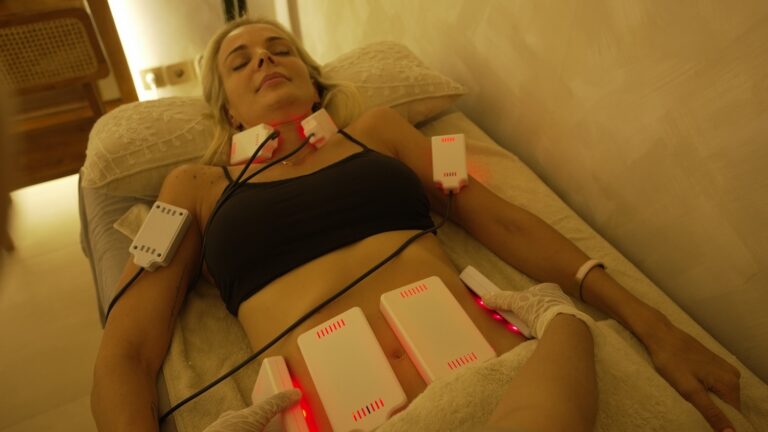
A common misconception in the aesthetics industry is that combining treatments, such as following cavitation with manual massage, provides an immediate “flush” of fat. While lymphatic drainage is beneficial for overall wellness and the reduction of post-treatment inflammation, research on serial cryolipolysis suggests that the clearance of adipocyte-derived debris is a slow process that cannot be forced by same-day intervention. The body follows its own internal timeline, and no amount of aggressive scheduling can bypass the necessity of the inflammatory phase.
Furthermore, it is critical to address the systemic impact of these therapies. For clients with underlying conditions—such as those dealing with neurological challenges where the Uhthoff phenomenon is a concern—any treatment that significantly alters core body temperature must be approached with extreme caution. Similarly, the efficacy of mechanical treatments like LPG Endermologie, which current literature describes as helpful for redistributing adipocytes and stimulating microcirculation, is often overestimated in terms of permanence. These therapies are most effective when used to support the body’s natural maintenance processes rather than as a primary weight loss strategy.
If you are considering a series of treatments, look for the point of diminishing returns. If you have completed a standard course—typically 5 to 10 sessions for cavitation—and the needle on your measurements has stopped moving, your body has likely reached its threshold for that specific intervention. Honesty in aesthetics is recognizing that at this juncture, the most “effective” treatment is often a transition to a different modality, such as muscle stimulation or targeted lymphatic support, rather than repeating the same cycle indefinitely. True progress is achieved by respecting the physiology of the cell, not the urgency of the calendar.