


Living at 8.5 degrees south, the skin in Bali is under a constant, high-intensity assault that differs significantly from temperate climates. Because the sun’s elevation is the dominant driver of UV intensity, the daily UV Index routinely exceeds levels that the World Health Organization advises for caution. Unlike UVB rays which cause surface burning, long-wave UVA radiation—which penetrates deep into the dermis—accounts for roughly 96.5% of the total UV reaching the ground. This exposure triggers the upregulation of enzymes like MMP-1, which actively cleave and degrade collagen fibers.
When you have typed “facials near me” into a search bar while navigating the Bukit, you are likely encountering a landscape where treatment definitions vary wildly. The service options range from superficial 20-minute hotel-spa cleanses to intensive, device-based courses designed to address structural photoaging. Understanding this distinction is critical because, in a high-UV environment, the objective of a clinical treatment shifts from simple aesthetic enhancement to the mitigation of cumulative UV-induced damage. Whether a treatment is merely a transient ritual or a functional intervention depends entirely on its ability to support the skin’s integrity against the daily, unavoidable acceleration of visible aging.
What a “Balinese facial” actually is
A true Balinese facial is fundamentally a ritual of botanical application and manual massage, distinct from the clinical, device-driven protocols common in Western dermatology. Traditionally, these sessions prioritize sensory experience, using indigenous ingredients like frangipani, sandalwood, or volcanic clay. While marketed as a “facial,” the core methodology relies on prolonged lymphatic drainage and facial acupressure rather than aggressive resurfacing. Clients should expect a cleansing phase followed by a mask of local flora, punctuated by extensive massage that engages the facial muscles.
To understand the efficacy of any facial, one must recognize that the procedure is strictly limited to the stratum corneum and the superficial epidermis. Cleansing is rarely a neutral process; surfactants act by removing sebum and surface soil, but they also extract endogenous lipids and natural moisturizing factors. If a cleanser is poorly formulated—specifically those with high pH—it can disorder the lipid lamellae, leading to increased transepidermal water loss and irritation. Consistent with guidance from the American Academy of Dermatology, effective cleansing should involve gentle, non-abrasive action rather than mechanical scrubbing.
Exfoliation, when performed in a professional setting, often utilizes alpha-hydroxy acids (AHAs). These function by reducing corneocyte cohesion, effectively detaching the stratum corneum rather than physically scraping the skin. While this provides a smoother texture, it is important to note that AHAs can increase photosensitivity to UVB radiation—a significant consideration in Bali’s equatorial climate. Because these treatments operate solely on the skin’s surface, they cannot address the underlying structural integrity of the tissue.
When seeking more than superficial maintenance, one must acknowledge that a facial’s ceiling is the epidermis. Structural changes, such as the tightening of the fibromuscular SMAS layer or the induction of neocollagenesis, require energy-based intervention. Clinical modalities like micro-focused ultrasound, which is FDA-cleared for lifting lax tissue, operate at depths of 3.0 mm to 4.5 mm, sparing the epidermis while creating thermal coagulation points in the deeper dermis. As biophysical studies confirm, such treatments allow for collagen remodeling without disturbing the skin barrier. Understanding this distinction—between the ritualistic comfort of a traditional Balinese treatment and the physiological potential of deep-tissue interventions—is essential for realistic expectations in any skincare journey.
The six treatments, and what each one physically does
Body Studio Bali’s Deep Cleansing Signature Facial serves as the foundational treatment, prioritizing the mechanical removal of debris and the optimization of the epidermal barrier. The physical mechanism involves a systematic process of cleansing, manual exfoliation, and targeted extractions, which effectively clears clogged sebaceous follicles and removes superficial keratinized cells. By addressing the accumulation of sebum and pollutants—compounded by the humidity of the Bukit peninsula—this treatment stabilizes the surface microenvironment. While it does not alter underlying tissue structure, it is the essential precursor to any more intensive modality, as a cleared stratum corneum allows for better penetration of subsequent topical hydrators and nutrient-dense serums.
Manual フェイス マッサージ, including the specialized modeling techniques utilizing cupping and guasha, operates on the principles of myofascial release and lymphatic stimulation. These modalities physically manipulate the superficial connective tissues and musculature of the face, neck, and scalp to encourage the drainage of interstitial fluid. Clinically, this manifests as a reduction in temporary periorbital and facial edema. The mechanical pressure on the masseter and temporalis muscles serves to inhibit chronic tension, providing a transient but objective increase in localized blood flow. While these manual techniques cannot induce permanent structural change or dermal remodeling, they are effective tools for managing transient puffiness and reducing the subjective sensation of muscular tightness.
LPG フェイス relies on mechanical roller-and-vacuum stimulation to mobilize the deep layers of the skin. By creating a controlled folding and unfolding of the dermal tissue, the device exerts mechanical stress on fibroblasts—the specialized cells responsible for producing collagen and elastin. Mechanistic rationale suggests that this mechanical strain triggers a mechanotransduction response, potentially stimulating cellular activity. Because this process aims to influence the slow turnover of structural proteins, results are strictly cumulative. Patients should view this as a maintenance modality, as it requires a consistent course of sessions to yield any observable improvement in tissue firmness or density.
EndosTherapy フェイス utilizes compressive micro-vibration via a sphere applicator, delivering targeted mechanical energy to the facial tissues. This modality functions through the transmission of rhythmic pulses that aim to improve microcirculation and lymphatic drainage, while simultaneously providing a toning effect on the facial musculature. Similar to manual massage, the immediate physical outcome is often a reduction in fluid retention and an increase in local temperature, which can facilitate tissue oxygenation. As with all mechanical interventions at Body Studio Bali, this treatment is not a surgical substitute; it is intended to provide incremental improvement in skin texture and contour through serial application rather than singular intervention.
Vacuum RF (Radiofrequency) Face employs electromagnetic energy to generate deep dermal heating. The physical mechanism relies on the dielectric property of the dermis; as the tissue resists the flow of the radiofrequency current, thermal energy is generated at the dermal level. This controlled heat induces the contraction of existing collagen fibers and stimulates the neocollagenesis process, which is the body’s long-term response to thermal trauma. Because chronic ultraviolet exposure in equatorial regions like Bali accelerates the degradation of collagen via matrix-degrading metalloproteinases, consistent sun protection is necessary to maintain the results of any thermal-based remodeling treatment. This modality is best suited for individuals with early-stage skin laxity.
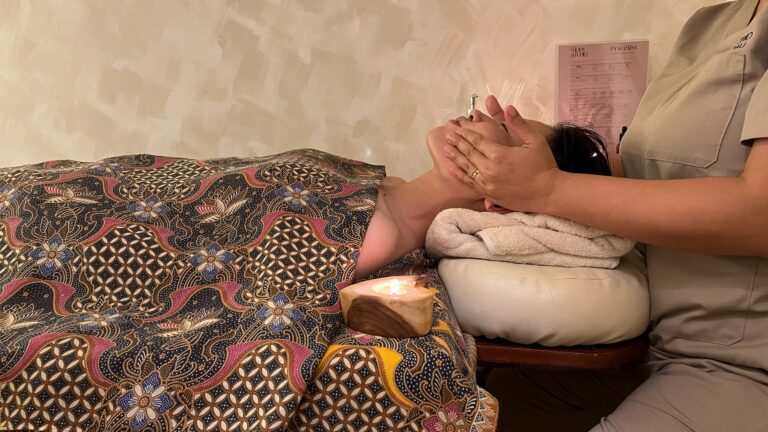
Cryolipolysis of the jawline leverages the principle of selective adipose tissue vulnerability to low temperatures. By applying controlled, sustained cooling to the localized fat deposits beneath the chin, the process induces apoptosis—programmed cell death—in adipocytes, which are then gradually cleared by the body’s lymphatic system. This modality is specifically indicated for small, stubborn fat pockets rather than general weight loss or sagging skin. It is essential to manage expectations: this is a non-invasive procedure with modest reduction outcomes. It does not replicate the mechanical tightening of the Superficial Musculoaponeurotic System (SMAS), which defines a surgical facelift, nor does it address severe laxity or platysmal banding, for which surgical intervention remains the standard of care.
- Device-based treatments are cumulative; single sessions serve only as an introduction, not a transformation.
- None of these non-invasive modalities function as a substitute for surgical procedures like rhytidectomy.
- Results are dependent on individual collagen metabolism and adherence to post-treatment sun protection.
Why Bali ages facial skin faster than home does
Living or holidaying in Bali means existing in a high-UV environment year-round. Located at approximately 8.5°S, the Bukit peninsula experiences consistently high solar elevation with no low-UV season to allow for dermal recovery. According to the World Health Organization, solar elevation is the primary driver of UV intensity, and approximately 60% of an individual’s daily UV dose is delivered during the four-hour window surrounding solar noon. Because Bali routinely reaches UV Index levels that warrant strict shade-seeking behavior, the cumulative impact on facial skin is significant.
The mechanism behind this is primarily UVA-driven. While UVB causes surface burning, UVA accounts for roughly 96.5% of the UV radiation reaching the ground. These rays penetrate deep into the dermis, where they trigger the upregulation of matrix metalloproteinases (MMPs) and suppress procollagen synthesis. This process, termed photoaging, is the leading cause of visible skin changes—such as dystrophic elastic fibers and loss of structural integrity—rather than chronological age alone. As noted in recent research, these reactive oxygen species damage fibroblasts, effectively dismantling the skin’s support architecture from the inside out.
The causal link between diligent sun protection and the preservation of skin youthfulness is clinically validated. The Nambour randomized controlled trial demonstrated that adults who practiced daily sunscreen application showed no detectable increase in skin aging over a 4.5-year period, performing 24% better than those who applied sunscreen at their own discretion. However, achieving this protection is often undermined by human error. The American Academy of Dermatology points out that most people apply only 20% to 50% of the required volume, failing to meet the amount needed to reach the labeled SPF. A full teaspoon is required for the face alone, and adherence to this is frequently challenged by the realities of a coastal lifestyle.
In the Uluwatu and Ungasan area, exposure is rarely brief or occasional. Swimming, persistent sweating, and long afternoons at the beach degrade the protective barrier provided by topical sunscreen, turning a routine morning application into an insufficient defense. This chronic exposure explains why many residents and travelers searching for "facials near me" find that their skin requires specific intervention to address the resulting collagen degradation. The long-wave UVA rays that penetrate these defenses pass through windows and light cloud cover, ensuring that the skin is under constant environmental stress throughout the day. At the Body Studio Bali location, understanding this specific photodamage profile is the foundation for selecting appropriate, evidence-based treatments designed to support the skin in a high-latitude environment.
Heat, humidity, and why over-cleansing backfires
Living and traveling in the Bukit peninsula presents a unique set of physiological challenges for the skin. In equatorial climates, ambient temperature acts as a direct stimulant for sebaceous activity; research indicates that the sebum excretion rate rises by approximately 10% for every 1 degree Celsius increase in temperature. This creates a cycle where the skin perpetually feels oily, often leading visitors to misinterpret normal physiological lubrication as a sign of accumulated debris.
The tropical humidity further complicates this by altering sweat duct function. According to clinical data on miliaria, sweat ducts can become occluded by a combination of skin debris and biofilm-forming bacteria. When these ducts are blocked, sweat leaks into the epidermis or dermis, causing overhydration and swelling that triggers further occlusion. This mechanism is common in hot and humid conditions, frequently manifesting as the characteristic heat rash that plagues many travelers.
The most frequent error in routine maintenance is the attempt to “strip” this sensation using aggressive surfactants. Cleansing is not a neutral act; strong agents remove essential sebum but also extract the skin’s own lipids and natural moisturizing factors. These surfactants can remain in the stratum corneum post-rinse, disordering lipid lamellae and measurably raising transepidermal water loss. The American Academy of Dermatology explicitly advises against scrubbing, noting that gentle, non-abrasive cleansing is sufficient even in humid climates. Body Studio Bali emphasizes this distinction, as over-cleansing often leads to secondary irritation that mimics skin sensitivity.
Finally, there is the common misunderstanding regarding chemical exfoliation. Alpha-hydroxy acids (AHAs) function by loosening cell-to-cell adhesion, which effectively reduces corneocyte cohesion in the stratum corneum. While this promotes desquamation, it comes with a specific biological trade-off: the process removes a portion of the skin’s protective barrier, which directly raises photosensitivity to UVB radiation. Given the intensity of the equatorial sun in Ungasan, aggressive chemical peels immediately before beach days are scientifically counterproductive. For those seeking professional treatments at the studio, timing these procedures to avoid immediate, high-index UV exposure is essential to prevent unintended post-inflammatory hyperpigmentation or barrier damage.
The part most men skip
The habit gap regarding sun protection is stark. According to national survey data, only 12.3% of men report always using sunscreen when outdoors for more than an hour, compared to 29.0% of women. Among men aged 18-29, that figure drops to 8.2%. This behavioral deficit carries significant clinical consequences in a high-UV environment like Bali, where the sun’s intensity frequently exceeds the World Health Organization’s threshold for extreme caution. Because males carry one-and-a-half times the mortality risk for melanoma compared to females—a gap that widens to three times after age 50—this avoidance of routine protection is a critical health oversight. Furthermore, men are statistically less likely to self-examine or seek professional dermatological care.
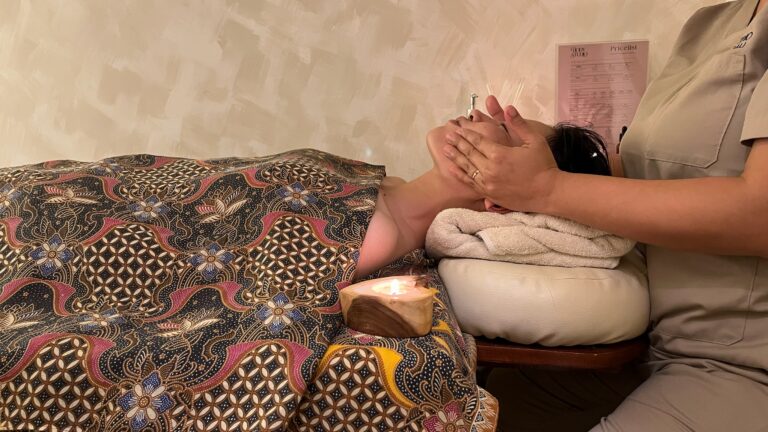
Physiologically, male skin is often misunderstood. It is typically thicker with higher, more stable sebum output and higher baseline collagen density, which can mask the early markers of photodamage. However, while women’s skin thickness remains relatively stable until menopause, male skin thickness begins a steady decline from age 20. Because photoaging accounts for the vast majority of visible skin changes rather than chronological age alone, this damage accumulates silently. UVA rays penetrate deeply into the dermis, where they trigger the release of enzymes like MMP-1 that cleave collagen and elastin, leading to a loss of structural integrity that is often only noticed once the damage is advanced.
For men unaccustomed to clinical skincare, a standard, delicate facial can feel underwhelming, often leading to the false conclusion that the category is devoid of utility. To bridge this gap, Body Studio Bali emphasizes treatments that provide tangible physical feedback and mechanical stimulation. Rather than viewing the visit as an add-on to a partner’s appointment, the Ungasan location facilitates concurrent bookings that treat facial health as a shared maintenance protocol. Practical, results-oriented entry points for men include:
- Vacuum Radiofrequency (RF): Utilizes thermal energy to target the deeper dermal layers, providing a firming sensation that aligns with the structural needs of thicker male skin.
- Cryolipolysis for the Jawline: Offers a mechanical approach to contouring, focusing on fat cell reduction in the submental area.
- Firm-Pressure Therapeutic Massage: Incorporates lymphatic drainage and myofascial release, which addresses tension while simultaneously improving skin circulation.
By shifting the focus from aesthetic enhancement to structural maintenance, these sessions align with the reality of clinical evidence, which shows that consistent, protective, and corrective care is the only reliable method to slow the progression of visible damage in high-UV regions.
Uluwatu, the Bukit, and what a facial actually costs in Bali
Navigating the aesthetic landscape in Bali often feels like a logistical exercise. While high-end, device-heavy clinics are concentrated in the northern hubs of Seminyak, Canggu, and Ubud, the Bukit peninsula remains a distinct gap in the market for accessible, high-performance skin care. Most visitors or residents based in Uluwatu or Ungasan find themselves either committing to a long drive through traffic or defaulting to hotel spa menus, where the “facial” often leans toward relaxation rather than clinical intervention. When searching for facials near me, the most significant barrier is the lack of transparency; many premium clinics across the island withhold their pricing entirely, requiring a consultation before a single number is disclosed. This opacity creates friction for those simply trying to understand the cost-benefit ratio of professional skin maintenance.
In the broader Bali market, entry-level cleansing facials typically start in the low hundreds of thousands of IDR, while multi-step, device-based sessions—which leverage technologies designed to address structural skin health—often exceed one million IDR per visit. It is critical to recognize that when dealing with device-based protocols, such as those utilizing micro-focused ultrasound, the efficacy is tied to the precision of thermal coagulation points reaching the SMAS layer. Because these treatments aim for long-term neocollagenesis and tissue tightening, they function as courses rather than one-off events. As noted in clinical consensus, the management of complications and the delivery of consistent results rely on adherence to a programmed series of sessions. Therefore, the single-session price is rarely the most economical way to access these technologies; the per-session cost within a five or ten-session structure is the only metric that provides a realistic picture of the investment required for long-term maintenance.
Body Studio Bali addresses this by publishing its pricing structure directly, allowing for comparison against other clinics without the need for an in-person enquiry. The studio operates on a tiered model: individual sessions are available for those sampling a technology, but the pricing is scaled to favor the 5-session and 10-session packages. This structure acknowledges the physiological reality of skin remodeling, where the biological response to non-invasive intervention is cumulative. For residents of the Bukit, having a dedicated facility in Ungasan removes the transit requirement while maintaining a clear, transparent cost model that allows for informed financial planning.
- LPG フェイス: 799,000 IDR (1 session) / 2,699,000 IDR (5 sessions) / 4,200,000 IDR (10 sessions)
- EndosTherapy フェイス: 499,000 IDR (1 session) / 2,069,100 IDR (5 sessions) / 4,049,100 IDR (10 sessions)
- バキュームRF フェイス: 399,000 IDR (1 session) / 1,259,100 IDR (5 sessions) / 1,799,100 IDR (10 sessions)
- Cryolipolysis Jawline Area: 809,000 IDR (1 session) / 2,672,000 IDR (5 sessions) / 6,317,000 IDR (10 sessions)
- フェイスマッサージ(ハンド): 149,999 IDR (1 session) / 670,500 IDR (5 sessions) / 1,341,000 IDR (10 sessions)
- LPG Body + LPG Face combo (120 min): 1,199,000 IDR (single package price)
- COMBO 10 Ultimate Face Package: 4,000,000 IDR (flat, 10 sessions)
- Deep Cleansing / Signature Facial: bookable, price on request via the pricelist page
Regardless of the chosen treatment, all clients should note that the results of any collagen-stimulating therapy are subject to environmental degradation. As matrix metalloproteinases are upregulated by ultraviolet exposure, the longevity of any facial treatment—whether manual or device-driven—remains contingent upon consistent, daily broad-spectrum sun protection to prevent the breakdown of existing dermal fibers.
Choosing by concern rather than by menu
Selecting a treatment requires aligning biological concern with mechanical intervention rather than selecting by title. If the goal is a singular event glow, the studio prioritizes manual lymphatic drainage or light enzyme peels to optimize circulation and surface texture without creating downtime. For congestion and breakouts, the mechanism shifts to clearing the stratum corneum; alpha-hydroxy acids are appropriate here, as they loosen cell-to-cell adhesion to facilitate desquamation. However, if the concern is active inflammatory acne or suspicious, evolving pigmented lesions, the studio makes no intervention; these require clinical diagnosis and management by a dermatologist, not a studio environment.
When the concern is early loss of firmness, fine lines, or sagging, the studio utilizes micro-focused ultrasound. Mechanically, this modality deposits energy at precise focal points in the reticular dermis and the SMAS fascia—the same fibromuscular layer surgeons target during traditional lifting procedures. By creating thermal coagulation points at depths of 3.0 mm and 4.5 mm, the treatment triggers neocollagenesis and collagen remodeling while keeping the epidermal barrier intact. Data confirms this approach is FDA-cleared for lifting submental and neck tissue, with systematic reviews indicating that benefits can manifest over several months as the skin responds to the initial thermal stimuli. Biophysical measurements confirm that this intensity reaches the deeper dermis without disrupting the skin’s surface, which is critical in an equatorial climate.
For skin impacted by excessive sun exposure, the focus shifts to recovery and protection. Photoaging occurs when UVA radiation reaches the dermis, driving MAPK/AP-1 signaling that degrades type I and III collagen via upregulated matrix metalloproteinases. In these cases, aggressive exfoliation is contraindicated, as AHAs can increase photosensitivity. Instead, the studio emphasizes barrier-restorative approaches. Regardless of the concern, the most effective intervention in Bali’s climate is not high-intensity, one-off procedures, but rather the consistent application of gentle, non-abrasive cleansing and strict photoprotection. True physiological improvement depends on managing the skin’s daily environment, as no studio treatment can offset the chronic impact of high UV exposure without a foundation of basic, diligent maintenance.
Questions people actually ask about facials in Bali
What is a Balinese facial?
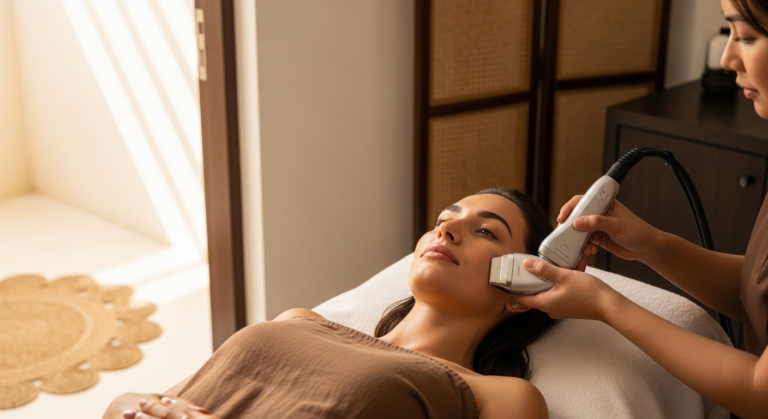
A Balinese facial combines traditional massage techniques with modern skincare protocols. The studio focuses on manual manipulation to improve circulation and lymphatic drainage, paired with cleansing and balancing steps suited to the tropical climate. By integrating Face Modeling Massage, cupping, and gua sha, the practice targets the superficial musculature to support facial contouring, distinguishing it from a purely cosmetic application of topical products.
What should I expect during a Balinese facial?
Expect a structured, goal-oriented experience rather than a generic spa routine. The process begins with an assessment of the skin’s current state. Depending on the chosen treatment—such as Deep Cleansing or manual Face Massage—the technician will perform precise movements to address congestion or lymphatic stagnation. The studio’s protocols emphasize technical accuracy to ensure that the skin barrier remains supported throughout the application of any active ingredients.
How long does a facial take, and how many sessions do results need?
While session length varies based on the specific treatment selected, aesthetic results are cumulative. For intensive procedures like those targeting neocollagenesis, consistent sessions allow for progressive collagen remodeling. Most clients require an initial series of treatments to establish a baseline improvement in skin tone or firmness. Following this, maintenance sessions help manage the ongoing effects of environmental factors on dermal health.
Where can I get a facial in Uluwatu and the Bukit?
Body Studio Bali is located in Ungasan, serving the Bukit peninsula. This location provides specialized aesthetic treatments including EndosTherapy, vacuum RF, and manual massage techniques specifically tailored for residents and visitors in the Uluwatu area. By centering its practice on the Bukit, the studio offers a dedicated facility for those seeking professional skin maintenance without needing to travel to busier hubs like Seminyak or Canggu.
How much does a facial cost in Bali?
The investment for a facial in Bali varies significantly based on the technology used, the expertise of the clinician, and the quality of the products. At Body Studio Bali, the cost reflects the professional-grade equipment utilized, such as the LPG Face or Cryolipolysis Jawline systems. Detailed information regarding the investment for each specific treatment is available in the pricing table provided elsewhere on this page.
Which facial is best for acne-prone or congested skin?
The studio’s Deep Cleansing Signature Facial is designed to address skin congestion through thorough, professional-grade extraction and purification steps. This protocol removes impurities that contribute to pore blockage. However, clients presenting with active inflammatory acne or cystic conditions should consult a dermatologist before booking, as certain mechanical treatments may exacerbate inflammation or cause further irritation to compromised skin tissue.
Which facial is best for anti-aging and loss of firmness?
For loss of firmness, technologies targeting the SMAS fascia are often the most effective. Techniques involving micro-focused ultrasound deposit energy to stimulate neocollagenesis. While these methods are FDA-cleared for tightening, they are best suited for mild-to-moderate laxity. Success depends on realistic expectations, as severe laxity may require surgical intervention.
Is a machine facial better than a hands-on facial?
Neither is inherently better; they serve different physiological goals. Hands-on treatments like Face Modeling Massage excel at lymphatic drainage and muscle relaxation. Conversely, machine-led treatments such as EndosTherapy or Vacuum RF utilize targeted energy to influence deeper dermal layers. The most effective approach often involves a combination of both manual techniques for surface-level care and technical systems for deeper, structural improvements.
Can men book these treatments too?
Yes, all treatments at Body Studio Bali are available to both men and women. The physiology of the skin does not change based on gender, and the studio’s protocols are equally effective for male clients seeking deep cleansing, facial contouring, or anti-aging maintenance. The Ungasan studio frequently hosts couples and partners who book their treatments simultaneously to align with their schedules while visiting the Bukit.
Is it safe to have a facial before or after a day in the sun?
Care must be taken, as exfoliation and certain active ingredients increase photosensitivity, making the skin vulnerable to UV damage. It is inadvisable to undergo aggressive exfoliation immediately before beach exposure. Post-sun, prioritize gentle, hydrating treatments to soothe inflammation. Because UV exposure degrades collagen, daily broad-spectrum sun protection remains the most critical factor in preserving the results of any facial treatment.