

In 1970, researchers Epstein and colleagues published an observation that would eventually change the landscape of aesthetic medicine. They described a phenomenon they termed “popsicle panniculitis”: infants who frequently sucked on ice lollies developed a localized loss of fat on the cheeks where the cold rested against the skin. Crucially, the skin itself remained entirely unharmed. This simple clinical curiosity suggested that adipocytes, or fat cells, were significantly more vulnerable to cold temperatures than the surrounding dermal tissue. It took until 2007 for Dieter Manstein and R. Rox Anderson at the Wellman Center for Photomedicine, Massachusetts General Hospital, to transform that childhood observation into a precise science, proving in a porcine study that controlled surface cooling could induce a gradual, selective loss of subcutaneous fat without damaging the skin or altering systemic markers like liver function or serum lipids.
Regulatory approval then arrived one body part at a time rather than all at once. The technology reached the market as CoolSculpting, and the United States Food and Drug Administration cleared it for the flanks — the love handles — in 2010, for the abdomen in 2012, and for the thighs in 2014. Each clearance rested on its own evidence for that specific area, which is why the cleared list reads like a map of the body rather than a blanket permission slip.
From Cellular Apoptosis to Sculpted Results
The coolsculpting origin is rooted in the principle of selective cryolysis. When fat cells are exposed to precisely calibrated, controlled cooling, they undergo a natural, delayed biological process of apoptosis. This is not an immediate melting away of fat; rather, the cold triggers an inflammatory response that causes the targeted fat cells to crystallize and subsequently die. Over the following weeks, the body’s lymphatic system naturally clears these defunct cells. It is a slow, methodical process, which is why the how cryolipolysis works narrative emphasizes patience over speed. Clinical data suggests that after a single treatment, a fat-layer reduction of roughly 10% to 25% can be expected, with results appearing progressively over two to three months as the body processes the material.
For those navigating the beauty culture of Bali, it is vital to separate the science from the marketing. First and foremost, this is a body contouring procedure, not a weight-loss treatment. As noted by experts at Harvard Medical School, the ideal candidate is already near their target weight, seeking to address specific stubborn pockets that persist despite consistent diet and exercise, such as the lower belly, flanks, or thighs. The fat freezing fda approved status covers these specific zones, acknowledging that the treatment does not address visceral fat—the fat stored around organs—and therefore offers no metabolic health benefit. Because the mechanism relies on the body’s internal cleanup system, there is no scientific basis for the idea that immediate massage or drainage can “flush” the fat out faster; the process is inherently time-dependent, as corroborated by research showing that cryolipolysis history and safety studies reveal no shift in lipids immediately following a session.

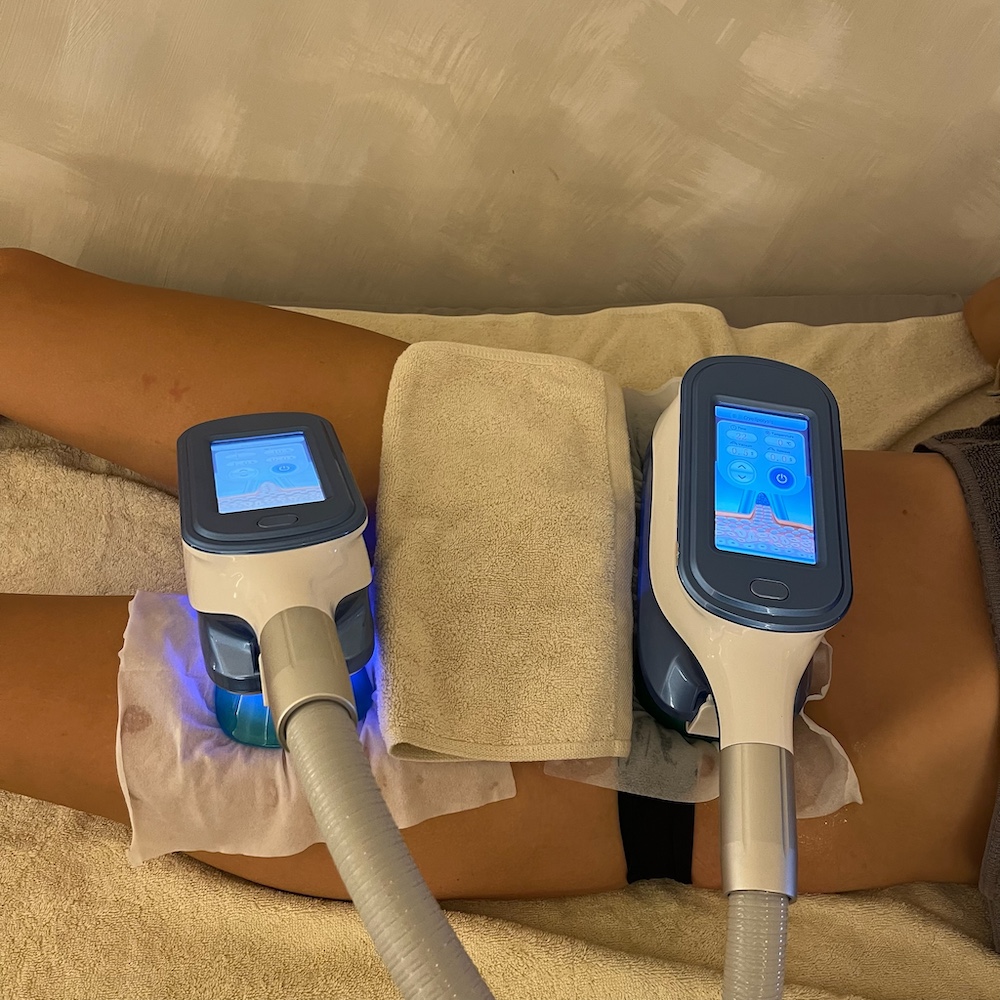
When considering the logistics of a session, the experience at Body Studio Bali typically lasts between 45 and 60 minutes per zone. The process is straightforward: practitioners use controlled cooling to target the area, followed by a period where the body naturally processes the fat cells. Because the treatment is non-invasive, most clients return to their daily activities immediately, though some temporary numbness or minor bruising is common. It is worth noting the rare but real side effect of paradoxical adipose hyperplasia (PAH), where the treated area instead increases in volume. A published review of the clinical data counted 33 documented cases against more than 850,000 procedures performed worldwide, typically surfacing around six months after treatment. Awareness of this risk is part of being an informed consumer of modern aesthetics.
Effective results generally require a structured series of sessions rather than a single attempt. By mapping specific stubborn zones and focusing the cooling technology strategically, practitioners can assist in refining a silhouette that diet alone hasn’t touched. Meta-analyses of clinical studies have confirmed that while circumference and fat thickness decrease significantly, body weight often remains unchanged, which is the hallmark of effective contouring. Because the body continues to clear cellular debris for up to several months after the final session, the ultimate contouring outcome is a marathon rather than a sprint. Managing expectations to align with the biological reality of cellular apoptosis ensures that the investment in these technologies results in satisfaction rather than disappointment.

In the context of the tropical environment, where body image is often front-of-mind, understanding that the technology targets subcutaneous fat—not fluid retention or metabolic weight—helps clarify why this approach is considered a premium support tool rather than a quick fix. Success relies on the synergy between the controlled cooling intervention and the natural, albeit slow, efficiency of the body’s lymphatic clearing process. By acknowledging the physiological limitations and the gradual nature of the results, one can approach body contouring with a clearer sense of what is biologically possible.